
The Blue Parakeet
Short Story
SHORT STORIES
3/18/202613 min read
The Blue Parakeet
I like to chase things. I don’t really know why. Maybe it is the thrill of the hunt. My mother says I have always been that way. She also worries I may be too much of a Tom-boy. I have made a list for you of all the things I like best to chase:
Ducks
Geese
Butterflies
Lightning Bugs
Snakes
Frogs
Cats (indoor and outdoor, mine and the neighbor’s)
Dogs (only mine because I had a bad experience with an unknown dog once)
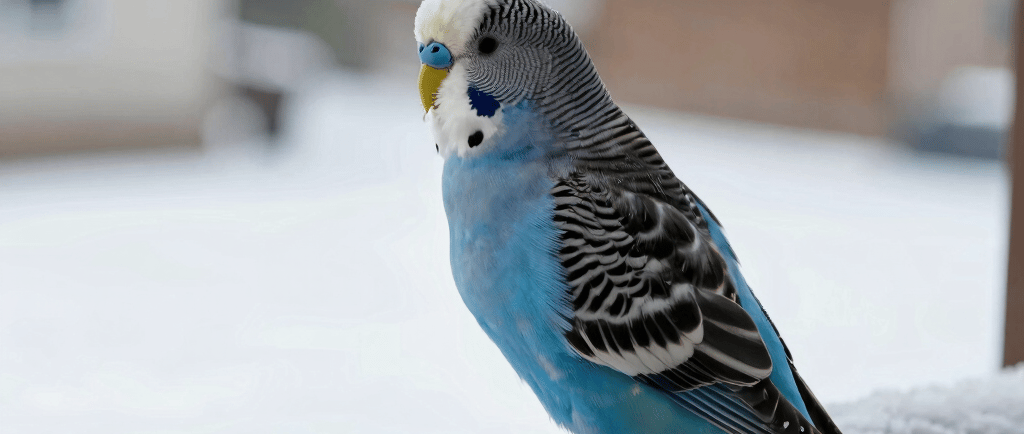
The parakeet
Dogs are probably the most fun to chase because you can tell they are having fun too. My one dog, Blondie, likes to play tag. I will chase her to one end of the yard and she will turn a quick half circle and then chase me to the other side. Sometimes I am running so hard I run smack into the chain link fence and occasionally fall down. When that happens, Blondie knows the game is over and it is time to be a friend. She will lick my face and nudge me with her nose trying to make me feel better. And I do, Blondie is a good friend. But I wouldn’t want to tell her to her face that Tigress, my cat, is probably my best friend.
Tigress doesn’t like me to chase her, but, boy, does she like to chase things! I have watched her chase a mouse in my room (I didn’t tell my parents because I thought they might poison it, but it didn’t matter because in the end I am pretty sure Tigress killed it, but there were no scratch marks or anything so maybe it died of a heart attack. Poor thing. Maybe I shouldn’t have let Tigress chase it.) I have also watched her chase squirrels, baby rabbits (which is funny because I read in a book once that baby rabbits are called kits or kittens), other cats, dogs (including the one I had that bad experience with) and even a racoon. Tigress is fearless. Or maybe she is just jealous and doesn’t want to share me with anyone else.
My mother likes it least when I chase snakes. And when I say chase what I really mean to say is I follow snakes. Snakes are really hard to find. They are really good at hiding, even when you know where to look, and sometimes even when you are looking right at them! But once you do find them, they usually don’t move so fast that you can’t keep up with them. My mother fainted once when I presented her with a tiny black racer snake. I thought she would be pleased, it was so pretty, and that particular one was really friendly. He didn’t struggle or anything, he just curled up in my hand and looked like he went to sleep! It was cold that day though and maybe I was just the snake equivalent of a radiator.
I read in a book once that snakes are cold-blooded. This is different from the phrase “cold-blooded killer,” which means someone who kills because they like to kill. For an animal to be cold-blooded it means they cannot make their own heat, they rely on the sun and warm things like heated rocks or even the asphalt to get warm. And it is only then that they can move around like I do. That’s why you will sometimes find snakes stretched out across the road in the evenings, especially in the spring and fall; they are trying to soak up the last of the heat from the black surface (I also read that black traps heat and white reflects it). My father is deathly afraid of snakes, especially the copperheads that like to stretch out across the asphalt when the sun goes down. I don’t see what the big deal is, I just go around them, or jump over them. They are so cold that they cannot move fast.
It seems to me there is a lot more freedom in being warm-blooded. I wonder why there isn’t the phrase “warm-blooded killer.” There are plenty of warm-blooded animals that kill things and sometimes not even to eat them. I read that some primates kill one another when they get into terrible fights or when one group raids another. They can be vicious. And I read that Killer Whales will sometimes kill baby Humpback whales for “sport,” the book said. But snakes, they only kill things in order to eat and stay alive. So, shouldn’t we say that someone who kills someone or something else in warm-blood?
I also read once that birds are the descendants of dinosaurs. You see, over millions of years animals change ever so slightly. They have what is called mutations that cause one of them to be different. And if that change is good for the animal, it will have babies, who will have more babies, and more babies, each with that little change and new changes of their own. And before dinosaurs were all killed-there seems to be some debate as to how this happened because not all my books say the same thing-a few of the dinosaurs were starting to change into birds. They had feathers and a small number of them could fly, or maybe did fly, it seems scientists-they are called paleontologists by the way-don’t know if the dinosaur they found actually flew, but it had the bone structure that could have let it fly. There is a lot we still don’t know. Even adults. Don’t you think that leaves so much room for possibilities!?
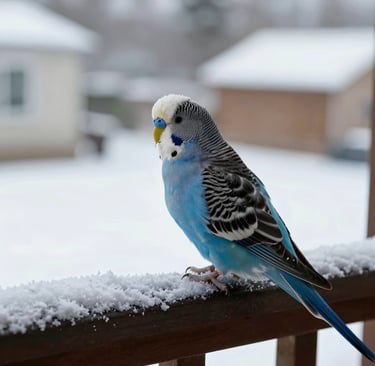
Anyway, I think about that just about any time I see a bird and I think about them being tiny dinosaurs, even if that is not scientifically accurate. We have a lot of birds in North Carolina. The ones I see the most are Cardinals (they are our State Bird I learned in fourth grade, but I have also learned since that they are the state bird of, like, a bunch of different states, so whose bird is it anyway?), Cat-birds, Wrens, Chickadees, Blue Jays, Bluebirds (these are different from Blue Jays), and a blue parakeet. My mother told me that parakeets are not native to North Carolina and that it shouldn’t be out there. It must have either escaped from someone’s house, or, here she harrumphed in that annoyed way, someone must have let it go because they couldn’t be bothered to take care of it anymore. My mother hates it when people don’t do what they are supposed to do. She also hates it when people don’t treat animals nicely. It really upsets her. She says if we are all God’s creation then to treat people and animals other than how we would treat God is a sin. To love God, she says, is to love all of creation. But then, I wonder sometimes, why does she not like snakes?
After I saw the parakeet for the first time, I did what I always do, I went to my books. I have so many books. My mother tells me “no” all the time, but she never says “no” when I ask for a book. Every wall in my room is lined with bookshelves, and I have taken over the shelves in the living room and bonus room too. And then there are the stacks of books all over the house that don’t have a shelf yet. We are waiting for my father to build some. So, I went straight to the bookcase to the right of my bedroom window because that is where I keep all my books on nature, animals, and the like. I found a book on birds and I flipped through it until I saw a picture of the parakeet I had seen in the backyard. It turns out there are lots of different parakeets and they come in different colors.
The one in my yard is blue and kids in the neighborhood who don’t know any better, or who don’t have books like I do, call it a “bluebird,” but that’s not right. It may be blue, but a “bluebird” is a separate species native to North Carolina. A parakeet, even a blue one, has origins in Australia. They are a kind of parrot. That means they are supposed to be really smart. I don’t know if the parakeet in my yard is smart. It is smart enough to come to the feeders to eat, but it doesn’t seem very smart because the book says it can’t survive in a climate as cold as North Carolina. So, if that parakeet were really so smart it would go back to the house where it came from, or fly in a random open window, where it could live indoors and stay warm and survive the winter.
But it is not just the cold that might kill the parakeet. It has predators-those are animals that hunt and kill other animals. My book says that large birds like eagles and falcons are the most likely predators of the parakeet in their native habitat. That isn’t good for the parakeet here. I have personally seen three different kinds of hawks, an osprey, and a bald eagle in our backyard or over the pond. And the parakeet stands out. It is so very blue. It doesn’t blend into the trees like other blue colored birds. You see it. So does Tigress. I have watched her stalk the parakeet as it sat at one of the bird feeders. Luckily, I was there and I distracted Tigress by opening a can of her favorite food. But I won’t always be there. And Tigress is on the hunt now. She even hunts through the glass of our sunroom window. She gets down real low, just under the window ledge and peeks over ever so slowly and nothing about her moves except for the darting of her eyes as the parakeet flies from here to there.
My book doesn’t say if the parakeet does damage to the local environment. Other invasive birds, as the book calls them, do damage by taking over nesting sites of other birds, killing other birds or eating the food other birds rely on. Some non-native birds I have noticed in my backyard are Starlings and House Sparrows. Yes, sparrows are non-native. They are so common that you wouldn’t think so, would you? But they don’t belong here. It wouldn’t be so bad if Tigress hunted the non-native birds that my book calls “invasive.” But she normally hunts native birds, like Titmice. She likes those best. They must be slow. And stupid. She also likes to hunt the Cardinals. The bright red male ones must be easy to spot. Poor things. Maybe I should start leaving open cans of food around the backyard for Tigress, then maybe she wouldn’t feel the need to hunt the birds so much. Or maybe she is just a warm-blooded killer.
The cold, my mother assures me, will eventually kill the parakeet. North Carolina isn’t the coldest place, but after the first ice-storm, that bird will be dead, she says. And so, I wonder why the parakeet didn’t just stay where it was. I mean, was it really worth it to fly out that window? Does the parakeet know it is going to die? Does it care? It seems happy for now. I hear it chirping all the time. But it doesn’t sing. It is not a songbird. I think it’s chirps are just as nice though. When I listen to it, I imagine I am someplace tropical, far-away, unknown, and I am an explorer in uncharted territory. Maybe the parakeet feels that way too. Maybe that is why it seems so happy to be outside. It can go where it wants and do what it wants and discover new things.
But the cold is coming and I can’t stand the thought of the poor parakeet dying. So, I rummage in the attic and find an old bird cage. My mother told me she caught two parakeets once by putting a cage out in the yard, putting food in it, and tying a string to the door. She waited all day, she said, waiting for the parakeets to go in the cage to eat. Finally, after hours, they flew in, both of them! She pulled the string and the door closed on them. They didn’t seem to mind at first because they were eating, but when they found out that the door had closed behind them they started hopping around like they are nervous, upset, or scared. My mother tried singing to them to calm them down, and they seemed to like that, even though they couldn’t sing back.
She brought them in for the winter. And that winter was especially cold, she says, the electricity went out and the house was as cold as it was outside. So much for trying to save the parakeets! But my mother doesn’t give up like that. She says that the stove was gas-run at the time and the gas lines hadn’t gone out. So she opened the oven door, put the oven on a low setting, and put the cage on the open oven door. She didn’t put the birds in the oven! You thought I was going to say that, didn’t you!? And my mother was able to keep the parakeets warm, and alive, all winter. She thought about releasing them again in the spring, but she didn’t want to try to catch them again. Instead, she let them fly around the house once a day. But it must not have been enough for them. My mother came home one day in the summer and both parakeets were dead in the cage. She says they must have died of a broken heart and she cried.
Despite my mother’s story I decided that I can’t let this parakeet freeze to death and I am going to try to catch it. I can always release it again in warm weather and just keep catching it again every fall. I won’t let it die of a broken heart. After I wade through the “antiques” and holiday decorations in the attic, I grab hold of the birdcage. It is old and rusted. I will have to clean it. I push the birdcage above my head so I can more easily walk through the path I have cleared for myself to get to it. The cage is heavier than I thought and weighs down on my shoulders. Like Atlas, I think to myself. I am a big fan of Greek mythology; I have ten books on it. I climb down the stairs, pulling the birdcage one rung down with each step I take, resting it on the mildewy wood that seems like it could cave beneath me at any minute. I get down to the bottom, gingerly place the cage on the floor, and with one full body motion fling the attic stairs back up to the ceiling. It felt good, like I had really accomplished something, so I smile to myself. Next, I head to the bonus room where I store chemistry, geology, and other scientific books that are not specifically about animals. I need to look up how to clean rust.
I need to open a couple different books before I get my answer. Rust is an iron-oxide, I learn, though I don’t really know what that means, even after reading the description. The important thing is that I learn rust forms when iron is exposed to oxygen and air moisture. And short of having chemical supplies, the best way to remove it is with an old fashioned scrubbing. I drag the birdcage from upstairs to down, work and re-work the child-proofing on the sink door, and grab the brush I see my mother use to clean the cast iron skillet. It is a wire brush and seems to do the trick. Outside, I scrub, and scrub, and scrub, red-orange rust bits flying to the wind. Pretty soon they cover the deck, they are in my hair, and my clothes have turned rust orange. But the cage is mostly clean now. I go back inside and open the cupboard where I find a giant container of white vinegar. I had read that vinegar can also be used to clean rust, so I decide to rinse the birdcage in vinegar rather than water to prevent new rust on the metal. Finally, I set it in the sun to dry. Tomorrow I will try to catch the parakeet.
I wake up in the morning and there is a slight chill in the air. October can be sunny and 75 degrees one day to cloudy and 55 the next in North Carolina. Immediately, I was worried for the parakeet. I rushed outside and leaned over the deck railing, straining my eyes and ears for any sign of it. Below, on the ground, the birdcage is empty. To my right, the flat bird feeder is empty. But out across the yard in the willow tree by the pond I see a flash of blue. I catch my breath, waiting for a better sighting, it could be a Blue Jay or a Bluebird or a blue plastic bag, or just my imagination. But no, I hear that familiar chirping. It is the parakeet. It has survived the first break in the weather. I have time to catch it. I add a handful of birdseed to the bottom of the birdcage and I tie a string to the birdcage door, like my mother said she did so many years ago and I wait. And I wait. And wait. No birds. None. I move location and try to hide better. Still no birds. I move again, under the deck this time. A couple times a sparrow shows interest but then flies off again. The parakeet doesn’t so much as come near it.
It goes on like this for a few days. I change the position of the birdcage. I change my hiding place. I change out the birdseed. I wait. Still nothing. The days and nights continue to swing in temperature. One morning I wake to the smell of tobacco in the air. Not tobacco as in cigarette smoke, I mean the smell of tobacco being cured. If you haven’t smelled it you are really missing out. It is spicy and sweet and maybe a little leathery and sticky in your throat. It is one of my favorite smells. And it means cold weather is coming.
But the parakeet and I continue to play hide and seek. Clearly, the parakeet is outsmarting me. And it goes on like this until Thanksgiving, and then Christmas, and then winter break, and then Valentine’s Day. And still I cannot catch it. And still it is alive. I begin to convince myself that the parakeet doesn’t need my help after all. It has done just fine this winter and warm weather is coming. I stop monitoring the birdcage and I even stop putting new food in it. But, I do leave some in there, just in case.
In April there is an unseasonable ice storm. I wake up and go through my morning routine as usual, which now includes checking on the birdcage. I have left it on the deck, near the flat bird feeder. As I approach, I see a lump on the floor of the cage, but the ice is covering it and I can’t tell what it is. I move closer, and through the ice crystals I begin to see blue. As I look down into the birdcage I realize it is the parakeet, frozen solid on the bottom of the cage, the door still open and the food left untouched. It didn’t die of heartbreak like my mother’s did. It died of the cold. It died retreating to somewhere familiar, flying back to a cage where it had probably lived before its life outdoors. I think about crying for a minute or two. Then I get the shovel and dig a grave for the parakeet. I bury it, cage and all.
Kristin J Connor Novelist
To see what I am up to visit me on Instagram.
Newsletter
© 2024. All rights reserved.